
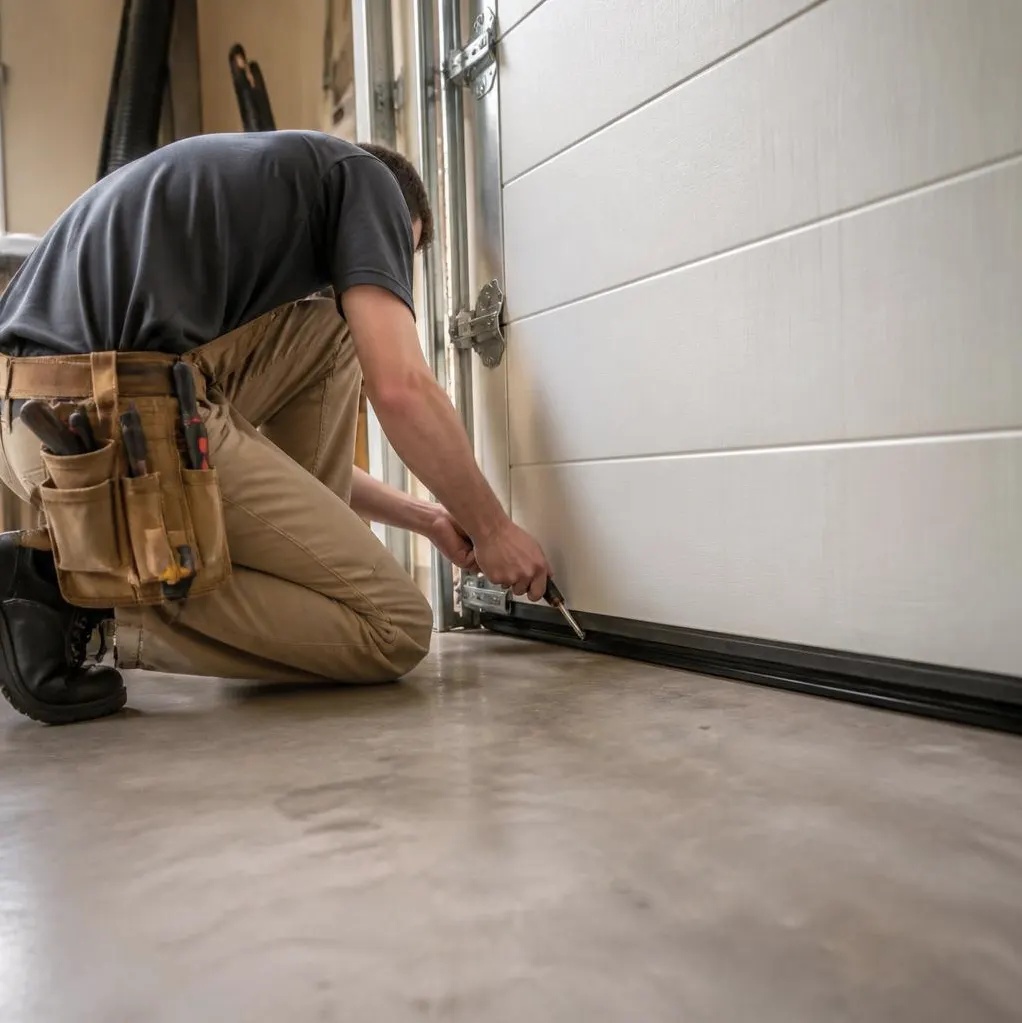
A garage door that reverses before it touches the floor, or refuses to close at all, is doing exactly what it's designed to do: stop before something gets hurt or damaged. Ignoring it for another season doesn't make the problem go away, it just means living with a security gap and a mechanical issue that gets worse under stress. A door stuck open through a nor'easter means snow and wind blowing straight into the garage, an attached-garage wall losing heat fast, and anything stored in there exposed to freeze-thaw moisture. A door that won't close at all is an open invitation sitting on the driveway overnight. And a spring or cable that's already struggling now will likely fail outright the first time a hard freeze puts extra strain on it. None of this improves on its own, and cold weather tends to turn a minor annoyance into a dead door fast.
The Symptoms You're Probably Seeing
- Door starts down and reverses a few inches or feet before reaching the floor, either every time or only sometimes
- Door reverses mainly when it's cold out, or only in low morning light
- Door won't move at all — the opener hums or clicks but the door stays put
- Door closes partway, then shoots back up with nothing visibly in the way
- Opener's indicator light blinks a set number of times when you try to close it
- Door responds to the wall button but not the remote, or vice versa
- Door is slow to respond or needs several presses before it reacts at all
What a Technician Checks, in Order
1. Safety Sensors (Photo Eyes)
This is checked first because it's the most common cause and takes two minutes to rule out. The two small sensors near the bottom of the tracks need a clear, aligned line of sight to each other. Cobwebs, dust, a box shoved too close, condensation, or low-angle fall and winter sun can all trip them. Bumped sensors are common too — a broom, a bike, lawn equipment in a tighter older garage. Fix: wipe the lenses, realign the brackets, clear anything in the beam path. If a sensor wire is frayed or chewed, which happens more often as rodents move into garages for the cold, that's a wire repair or sensor replacement.
2. Track Alignment and Obstructions
Rollers riding in a track that's shifted, bent, or collecting debris will bind and trip the auto-reverse. Older housing stock with original doors often has tracks that have loosened over decades, especially where mounting brackets have worked loose from years of slab vibration and freeze-thaw cycling. Ice buildup at the bottom of the track is also a frequent local cause once temperatures start dropping below freezing overnight. Fix: tighten brackets, realign the track, lubricate rollers, or replace a section of track if it's bent beyond adjustment.
3. Springs
Spring tension and condition come next, because a weakening spring makes the opener do more lifting than it's rated for — and the opener's force sensor reads that extra strain as an obstruction and reverses the door. Visible gaps in a torsion spring, or a door that feels unusually heavy when lifted by hand with the opener disconnected, point here. Springs on original doors in older homes throughout the Marlton area are often well past their rated cycle life. Fix: spring replacement — not a DIY job given the tension involved, and it needs to match the correct wire size and length for the door's actual weight.
4. Cables
Frayed or slipped lift cables unbalance the door, which causes binding, crooked drops, or false sensor trips that look identical to a spring problem from the outside. Fix: cable replacement, usually done alongside spring work since the two wear on similar timelines.
5. Opener Force and Limit Settings
If the sensors, track, and springs all check out, the opener's own force and travel-limit settings are next. These can drift over time or get knocked out of adjustment, including after a power surge or battery backup event during a storm. Fix: recalibrating the limit and force settings to the opener's specs — straightforward in theory, but easy to get wrong and end up with a door that closes with too much force instead of too little.
6. Opener Motor or Logic Board
Last on the list because it's the least common and most expensive to resolve. Grinding sounds, a motor that hums without moving the door, or inconsistent behavior that no adjustment fixes usually points to a worn gear, failing motor, or circuit board issue. Fix: repair if the unit is newer and parts are available, replacement if the opener is old enough that parts are scarce or the same issue keeps resurfacing.
When to Call Marlton Garage Door
If you've checked the sensors and cleared the obvious obstructions and the door still won't cooperate, it's time to call in a technician. Marlton Garage Door runs through this exact sequence — sensors, track, springs, cables, opener settings — and can usually tell you what's causing it on the first visit, with real options at each step instead of a blanket recommendation to replace everything. For spring or cable issues, our spring replacement service fixes the actual cause instead of masking it with force-setting tweaks that just put more strain on the opener. For openers acting up after a storm or simply getting old, our garage door opener repair and installation service gets things back to normal before the first hard freeze locks in whatever's currently wrong.
Don't wait for a January morning to find out your garage door won't open. Call Marlton Garage Door today to get it diagnosed and fixed before winter settles in.